
National Apprenticeship Week 2025 – Focus and Results

As we write this, National Apprenticeship Week 2025 is in its dying hours. This week has been as much fun as it always is, with so many events and get-togethers across the country and plenty of activity on social media. We really enjoyed seeing the conversations unfold — employers sharing experiences, apprentices telling their stories, and organisations coming together to celebrate skills, learning, and growth.
But with all that activity and so much information on offer, it’s worth stepping back and asking: what are the key takeaways? What is the overarching focus of National Apprenticeship Week 2025, and what are the results we can take from it?
In a Nutshell
Developing our people is the key to business growth and UK economic prosperity.
This message came through loud and clear during National Apprenticeship Week 2025. It is no longer up for debate whether or not developing people is worth it for your business. The view that training is just a drain on time and resources has been perpetuated for far too long, and that mindset is crippling at both a micro (individual team member) level and a macro (the wider business) level.
Business growth happens when people growth happens — proven fact.
Whilst a business stays in its comfort zone, happy that its people “know enough,” it will be unable to grow, unable to sustain its market position, and will gradually fall behind. National Apprenticeship Week happens primarily to raise awareness and educate business owners about the vital role training plays in their own success — and National Apprenticeship Week 2025 did exactly that.
Addressing the Most Common Apprenticeship Concerns

In our closing words of National Apprenticeship Week 2025, we wanted to pick out the most frequent concerns we hear from business owners about apprenticeships during this week every year.
“If I invest in training an apprentice, what’s in it for my business?”
Our answer: Everything.
Having an apprentice is not about that person’s benefit at the expense of company time, money, and effort — that is a very common misconception. First and foremost, training must happen for a business to have the skills it needs to operate, to succession plan, and to reach its own potential.
Look at how successful businesses operate when they have well-trained talent. Look at the products and services they’re able to offer in the marketplace and the competitive edge they hold. But the benefits go far beyond that. Businesses we work with have seen significant gains from training staff through the apprenticeship system: large cost savings, fresh ideas, greater efficiencies, reduced workloads, increased web traffic, higher client spend — to mention just a few.
“If I invest time and effort to train someone well, I think they’ll just leave.”
Our answer: let’s look at what research tells us.
People don’t usually leave jobs because they’re trained. They leave because of:
Lack of career growth
Poor management or lack of support
Better pay and benefits elsewhere
Work-life balance issues
Lack of recognition and appreciation
Poor company culture
Job insecurity
Or a desire for a complete career change
Looking at that list, at least half relate to a lack of support to grow or succeed. Training is actually one of the most effective methods of keeping people.
We all remember environments — at work or elsewhere — where we were held back from reaching our potential. We also know that if someone had invested in us, supported us, and wanted us to succeed, we would have stayed loyal and worked incredibly hard in return. That’s what training does.
As Richard Branson famously said:
“Train people well enough so they can leave, treat them well enough so they don’t want to.”
“If I take on an apprentice, that’s another wage we have to pay — and we’re just a small company.”
Our answer: you don’t have to take on a new member of staff.
The apprenticeship scheme allows you to upskill existing staff. No one is too old or too experienced to benefit from the right training at the right stage. Apprenticeships go all the way up to Master’s degree level. The word “apprentice” can be misleading — we are all apprentices to someone more knowledgeable than ourselves.
The apprenticeship system exists specifically to support businesses where investing in training would otherwise be too expensive. It opens the door to accessible, high-quality, practical training for businesses of all sizes — primarily for the prosperity of the business itself.
Turning Awareness Into Action
The real impact of National Apprenticeship Week 2025 won’t be measured by posts, events, or conversations alone — but by what happens next. Awareness is powerful, but action is what creates results.
Whatever your question, please drop us a line, and we can talk you through the different options available and help you find the right type of training and funding for you and your team.
As this year’s National Apprenticeship Week comes to a close, we’re already looking ahead to National Apprenticeship Week 2026. The momentum continues to build, and the message remains clear: when we build up our people, we build stronger, more successful businesses.
Let’s keep developing our people — and in turn, keep growing our businesses.

Solving the Challenge of Recruitment and Retention
View HERE on LinkedIn
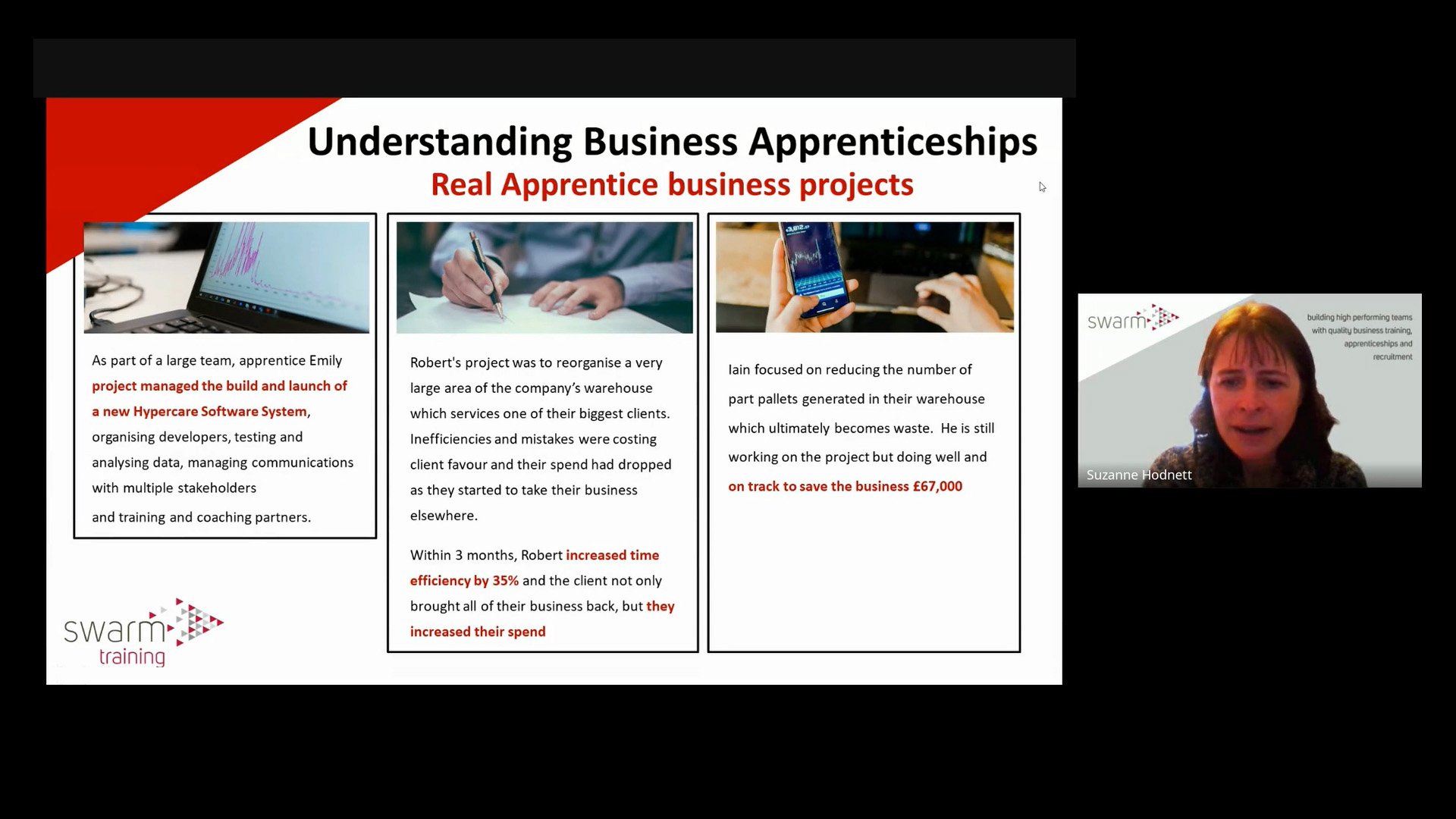
Understanding Business Apprenticeships - Forum for Employers
View HERE on YouTube
All information is correct at the time of publication. For up-to-date news about apprenticeships, please visit the UK Government’s website.